
Our printed electronics lab combines materials expertise across graphene, 2D layered materials and metallic nanomaterials with advanced printing capability including inkjet, screen, flexographic, gravure and slot-die printing. This allows organisations to move from formulation and small-scale prototyping through to pilot-scale process development and application-focused testing.
We support a wide range of printed electronics applications, including biosensors, wearable health monitoring, environmental sensing, structural monitoring, embedded heaters and thermal management technologies. By combining formulation, print process development and characterisation, the lab provides a testbed for rapid evaluation of ideas and development of commercially viable routes to market.
Our team works collaboratively with partners to solve technical challenges, refine printing methods and identify the right materials, processes and manufacturing pathways for each application. Whether you are developing proof-of-concept demonstrators or preparing for pilot production, we help reduce risk and accelerate development.
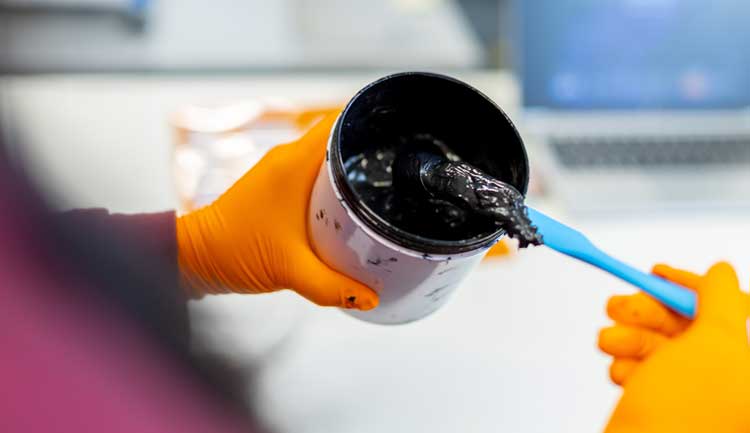
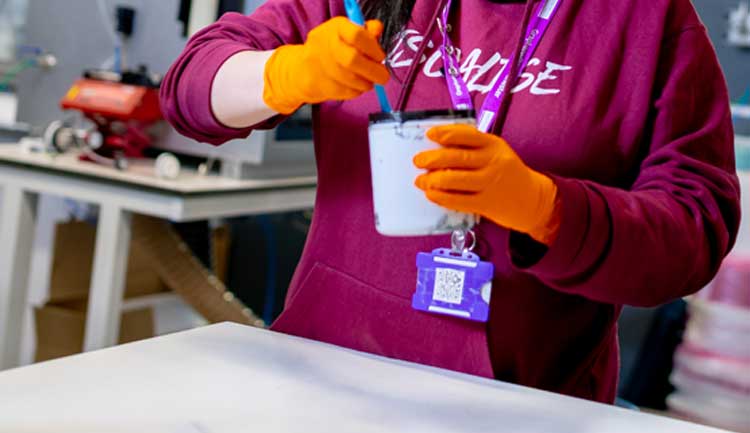
Ink formulation and materials development
The GEIC provides dedicated facilities for the development of new coatings and the optimisation of existing systems.
Supporting the development of printable functional inks and pastes for advanced electronic applications.
We formulate and evaluate inks using graphene, 2D materials and metallic nanomaterials, with access to mixing, coating and characterisation tools to assess rheology, electrical properties, particle size and thin film performance.
Screen printing for functional devices
Developing printed devices with high precision, repeatability and application-ready formats.
The Microtec MTP-1100 screen printer provides automatic alignment to ±10 µm accuracy, line widths down to 100 µm and large print areas for rapid development of biosensors, heaters and mechanical sensors. Multiple designs can be printed in one run for fast optimisation and evaluation.
- Automatic alignment: ±10 µm
- Line width: 100 µm
- Large print area up to 750 mm x 750 mm

Roll-to-roll printing and pilot production
Our Coatema Basecoater supports flexographic, rotary screen, gravure and slot-die printing at speeds up to 20 m/min, with hot-air drying and continuous processing onto paper, plastics and fabrics.
This helps organisations de-risk scale-up and transition towards production.
- Print methods: flexographic, rotary screen, gravure and slot-die
- Process speeds up to 20 m/min
- Suitable for paper, plastics and fabrics
Inkjet printing and rapid prototyping
Supporting high-resolution research and development for printed electronic applications.
The PiXDRO LP50 inkjet printer enables high-resolution patterning with line widths down to around 10 µm, supporting development of printed electronics, photovoltaics and biomedical applications. The flexible platform is ideal for process evaluation and material screening.
Application development and commercialisation support
Working with partners to turn printed electronics concepts into practical, scalable technologies.
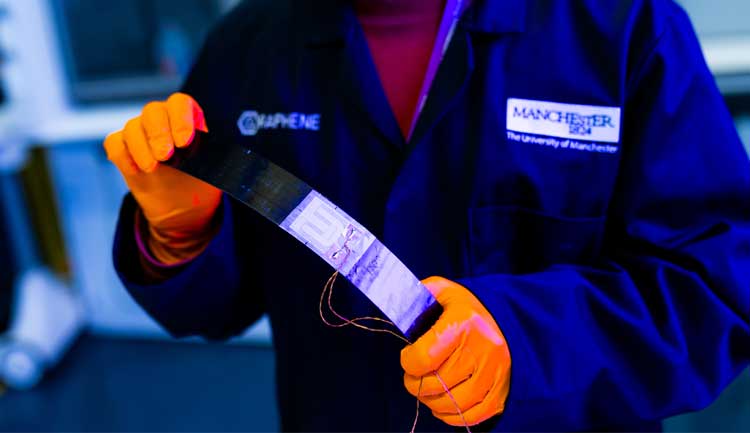
We support projects across sensing technologies for structural monitoring, wearable health and environmental monitoring, as well as embedded heating and other thermal management applications. Our team helps partners solve technical problems, access supply chains and develop commercially viable routes for new technologies.


Develop and evaluate inks using rheology, electrical characterisation and thin film analysis

Access screen, inkjet, gravure, flexographic and slot-die printing for different application needs

Develop biosensors, strain sensors, heating elements and other smart printed devices

Support greener electronics through smarter materials, sustainable chemistry and lifecycle thinking

"In the printed electronics lab, we work on a wide range of applications from sensing technologies for structural monitoring, wearable health and environment monitoring through to embedded heating and other thermal management technologies. We provide access to expertise, equipment and supply chains to help de-risk the commercialisation of printed electronic technologies."
Dr Andrew StrudwickApplication Manager