

Graphene's rise to a material transforming modern life, is inseparably linked to The University of Manchester. The isolation discovery of graphene at Manchester has reshaped materials science and positioned the University at the centre of a global research and innovation ecosystem.
What is graphene?
Graphene is the name given to a single layer of carbon atoms arranged in a honeycomb lattice. It is the basic building block of graphite – the same material found in pencil lead – but with extraordinary properties.
It is the strongest known material, yet also flexible and stretchable. Despite being just one atom thick, it conducts electricity and heat exceptionally well, making it a revolutionary material for applications ranging from aerospace and digital electronics to biomedicine.
The 'Friday night experiments'
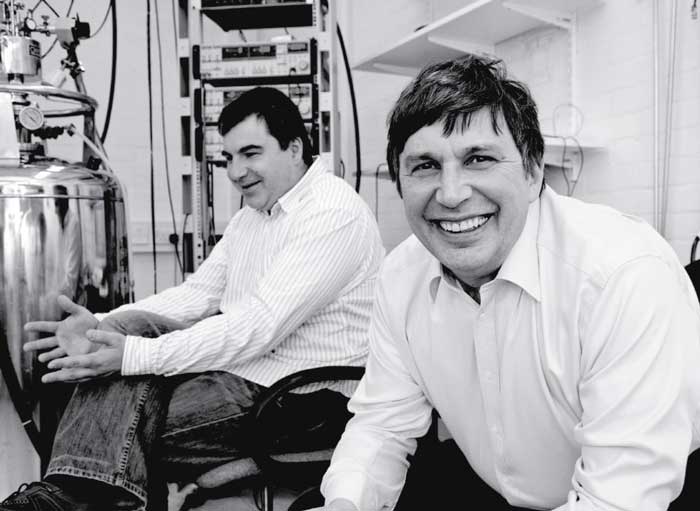
In 2004, Professors Sir Andre Geim and Konstantin Novoselov, working at The University of Manchester, successfully isolated graphene for the first time. Using a simple mechanical exfoliation technique – peeling layers from graphite with ordinary adhesive tape – they produced flakes just one atom thick.
The work emerged from an unusually open experimental environment, including informal “Friday night experiments” in which unconventional ideas could be explored outside the constraints of formal research programmes. This approach, later widely known as the “Scotch tape method,” enabled graphene to be isolated and studied as the first two-dimensional material.
Discovering extraordinary properties
Once isolated, graphene’s properties quickly set it apart from all known materials. It is exceptionally strong while remaining light, flexible, and almost completely transparent.
It conducts electricity and heat with remarkable efficiency, and yet it can act as a barrier, blocking helium, the smallest gas atom by size.
Nobel prize recognition
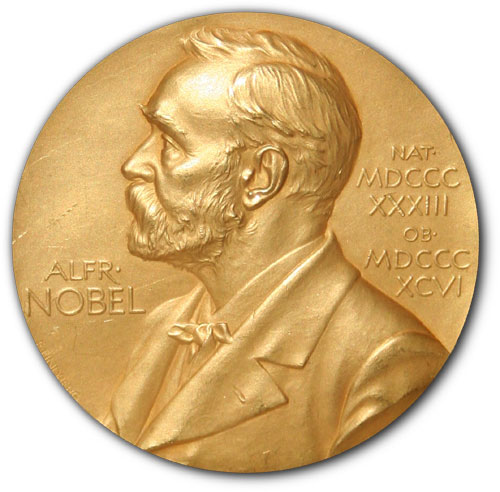
The importance of the Manchester discovery was recognised internationally in 2010, when Professors Sir Andre Geim and Konstantin Novoselov were awarded the Nobel Prize in Physics for their groundbreaking experiments on graphene. Coming just six years after the original discovery, the award reflected both the fundamental significance and the immediate impact of their work.
This recognition firmly established The University of Manchester as the birthplace of graphene and as a world-leading centre for research into two-dimensional materials.
Building a global research ecosystem
Following the Nobel Prize, the University made substantial investments to expand graphene research and accelerate its translation into practical applications. Dedicated institutes and advanced facilities were created to support work across physics, chemistry, engineering, and materials science. Researchers at Manchester also broadened the field beyond graphene itself, pioneering studies of other two-dimensional materials and layered heterostructures.
Alongside graphene, the original 2D material, a whole new family of more than 150 single-layer materials have now been isolated. Some are single-element graphene analogues such as borophene, silicene, phosphorene, germanene or stanine, whose parent elements are clustered in the periodic table near carbon. This work helped shape a rapidly growing international research community and reinforced Manchester’s leadership in the field.
From discovery to technology
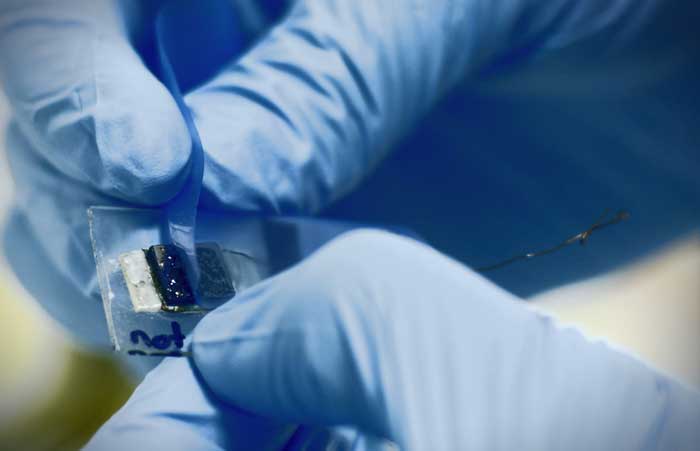
A central challenge in graphene research has been translating scientific breakthroughs into real-world technologies. At Manchester, researchers have explored applications ranging from flexible and high-speed electronics to energy storage, sensors, biomedical devices and advanced composite materials.
While early expectations of rapid commercialisation proved optimistic, the University has played a leading role in developing realistic approaches to scale-up, manufacturing, and industrial integration. This emphasis on responsible innovation has influenced how graphene technologies are developed worldwide.
How graphene was discovered
The story of graphene's isolation at The University of Manchester is one of curiosity, experimentation and the determination to turn a research breakthrough into a science revolution. The film brings this moment to life through the people and place behind it, and the shared sense of purpose that ensured graphene’s unique properties drive progress around the world.
Watch the film to explore how graphene was discovered at Manchester and why it continues to influence science and technology today.
