

The challenge: Reducing cement’s carbon footprint
Concrete is the backbone of modern infrastructure, but its key ingredient—cement—is responsible for more than 7% of global CO₂ emissions. The construction industry faces a pressing challenge: how to maintain strength and durability while reducing environmental impact.
Enter Concretene—a groundbreaking innovation developed in collaboration with The University of Manchester’s Graphene Engineering Innovation Centre (GEIC). This graphene-enhanced concrete offers a solution that not only cuts emissions but also improves performance and longevity.
From Lab to landmark: The birth of Concretene
Engineers at GEIC saw an opportunity: could graphene transform concrete into a stronger, more sustainable material? Working alongside construction specialists, the team developed Concretene, an advanced additive that enhances concrete’s mechanical properties.
Turning innovation into impact
The GEIC’s leading facilities and engineering expertise accelerated Concretene’s development. The team first conducted rigorous lab-scale trials, proving that graphene significantly increased the concrete’s strength, durability, and resistance to corrosion.
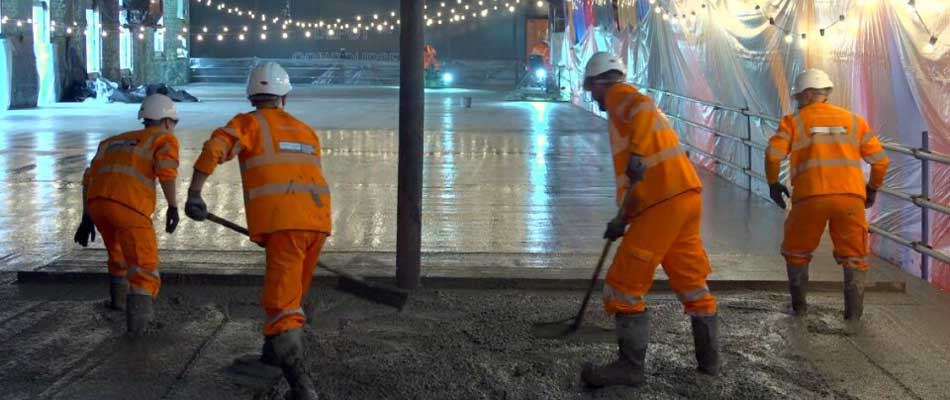
Next came the real-world tests. In collaboration with Nationwide Engineering, Concretene was used in a 700m² floor slab in Amesbury, Wiltshire, followed by additional test sites in Manchester—including an access road and a suspended floor at the Mayfield Depot regeneration project.
These trials demonstrated Concretene’s potential to redefine sustainable construction, offering key benefits:
✅ Lower emissions – Up to 30% reduction in CO₂ output.
✅ Cost savings – 15–20% decrease through cement reduction, extended service life, and lower carbon taxes.
✅ Material efficiency – 30% reduction in material usage for slab applications.
Beyond the environmental and financial advantages, the project also created over 12 new jobs, driving economic growth alongside sustainability.
Paving the way for the future
Concretene’s success is only the beginning. With further testing and certification underway, it is poised to become a mainstream construction material, offering a scalable, low-carbon alternative to traditional concrete.
For GEIC, this collaboration exemplifies its mission: bringing graphene-based innovations from the lab to real-world applications. By providing cutting-edge expertise, funding support, and access to leading facilities, GEIC helped fast-track Concretene’s commercialisation, proving that graphene has the power to revolutionise industries.

"No one else has developed graphene-enhanced concrete to this scale."
Alex McDermottCo-founder of Concretene
