
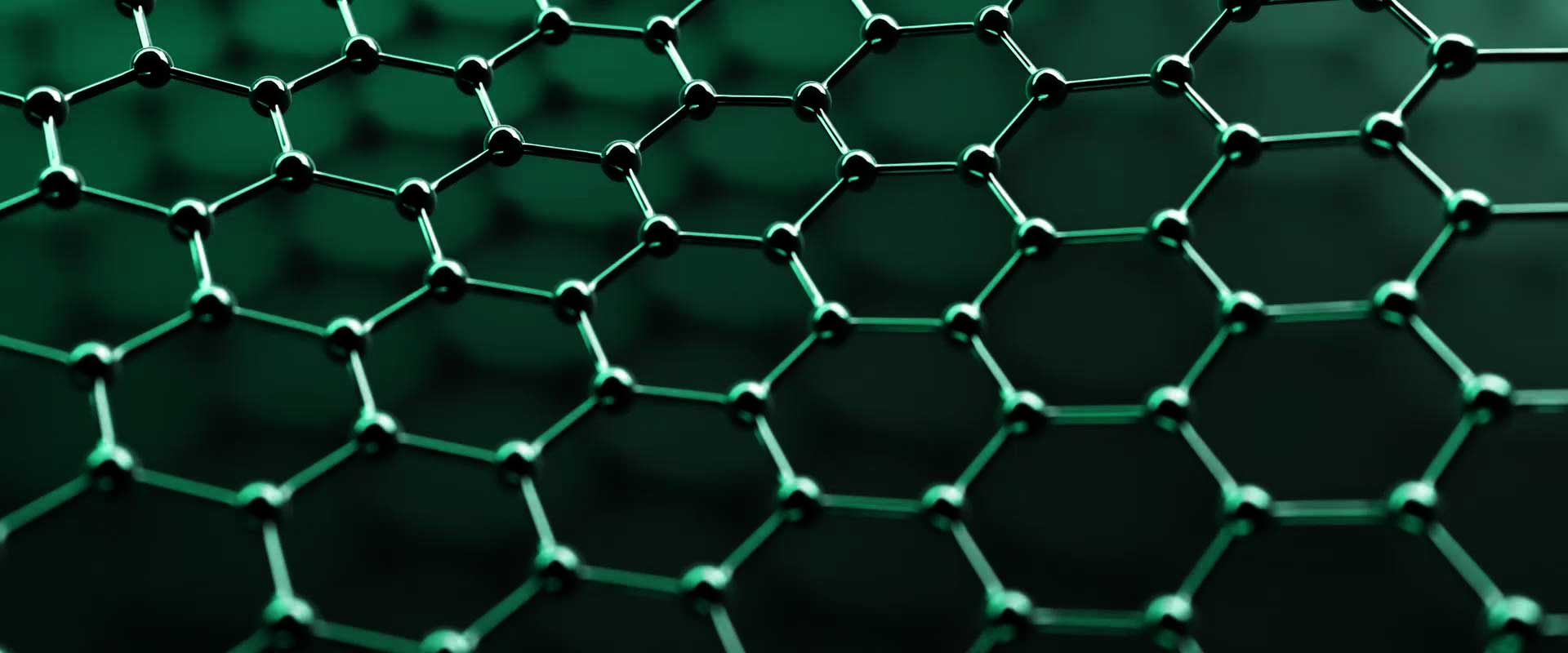
The Graphene Engineering Innovation Centre (GEIC) at The University of Manchester accelerates the development and commercialisation of graphene and advanced materials.
By combining world-leading research with engineering expertise and industrial collaboration, GEIC provides the environment needed to translate breakthrough science into real-world technologies.
The centre connects researchers, engineers, startups and global industry partners to develop, test and scale new materials and processes. Through specialist facilities, multidisciplinary teams and an industry-focused model, GEIC supports innovation from early validation through to pilot-scale production and commercial deployment.
Our approach
Turning advanced materials innovation into real-world impact
At the Graphene Engineering Innovation Centre, we connect partners with world-leading researchers and engineers, enabling businesses, from startups to global industry leaders, to translate graphene and advanced materials into scalable, commercially viable technologies.
Our unrivalled pilot-scale facilities and collaborative environment support the full innovation journey, helping partners move seamlessly from early validation through to real-world deployment in global markets.

Our capabilities
Expertise, facilities and industrial-scale equipment to accelerate innovation
The GEIC provides access to specialist laboratories, pilot-scale facilities and advanced equipment that enable organisations to develop, test and scale next-generation materials without significant upfront investment. From material synthesis and formulation to prototype manufacturing, characterisation and pre-production validation, our capabilities are designed to support the transition from innovation to commercial reality.
Working across sectors including construction, energy, composites, coatings and electronics, we combine industrial capability with technical expertise to help partners reduce risk, accelerate scale-up and bring advanced materials technologies closer to market readiness.

Our impact
Where world-leading research meets industrial ambition
The Graphene Engineering Innovation Centre provides a unique environment where academic excellence, engineering expertise and industrial collaboration come together to accelerate innovation. With access to specialist facilities, multidisciplinary teams and a global network of partners, GEIC helps organisations reduce risk, develop new technologies and bring advanced materials to market faster.
This collaborative model enables companies of all sizes to turn scientific breakthroughs into real-world impact.

Work with us
Start a collaboration with the GEIC team
The Graphene Engineering Innovation Centre works with industry partners, researchers and innovators to translate advanced materials research into real-world applications. Through collaboration, technical expertise and access to specialist facilities, GEIC supports organisations at every stage of innovation, from early exploration to commercial deployment.
Whether developing new technologies or scaling existing solutions, working with GEIC begins with a conversation.

GEIC at a glance
- Location: The University of Manchester, UK
- Focus: Commerclialisation of graphene and advanced materials research into real-world technologies
- Activities: Collaborative R&D, Commercialisation, technology development, scale-up and industrial innovation
- Expertise: Multidisciplinary teams combining scientific research, engineering and commercial insight
- Facilities: Specialist laboratories and pilot-scale equipment for materials development and testing
- Partnerships: Collaboration with global industry partners, startups and research organisations

The University Manchester is the home of graphene. It was isolated here in 2004 and today, the University continues to lead advances in graphene and advanced materials. Its integrated approach links research, innovation and scale-up, enabling the translation of discovery-led science into real-world application.
With a proven ability to work closely with industry and accelerate adoption, it contributes to national and international advanced materials ecosystems while maintaining a clear focus on impact, not just discovery.
